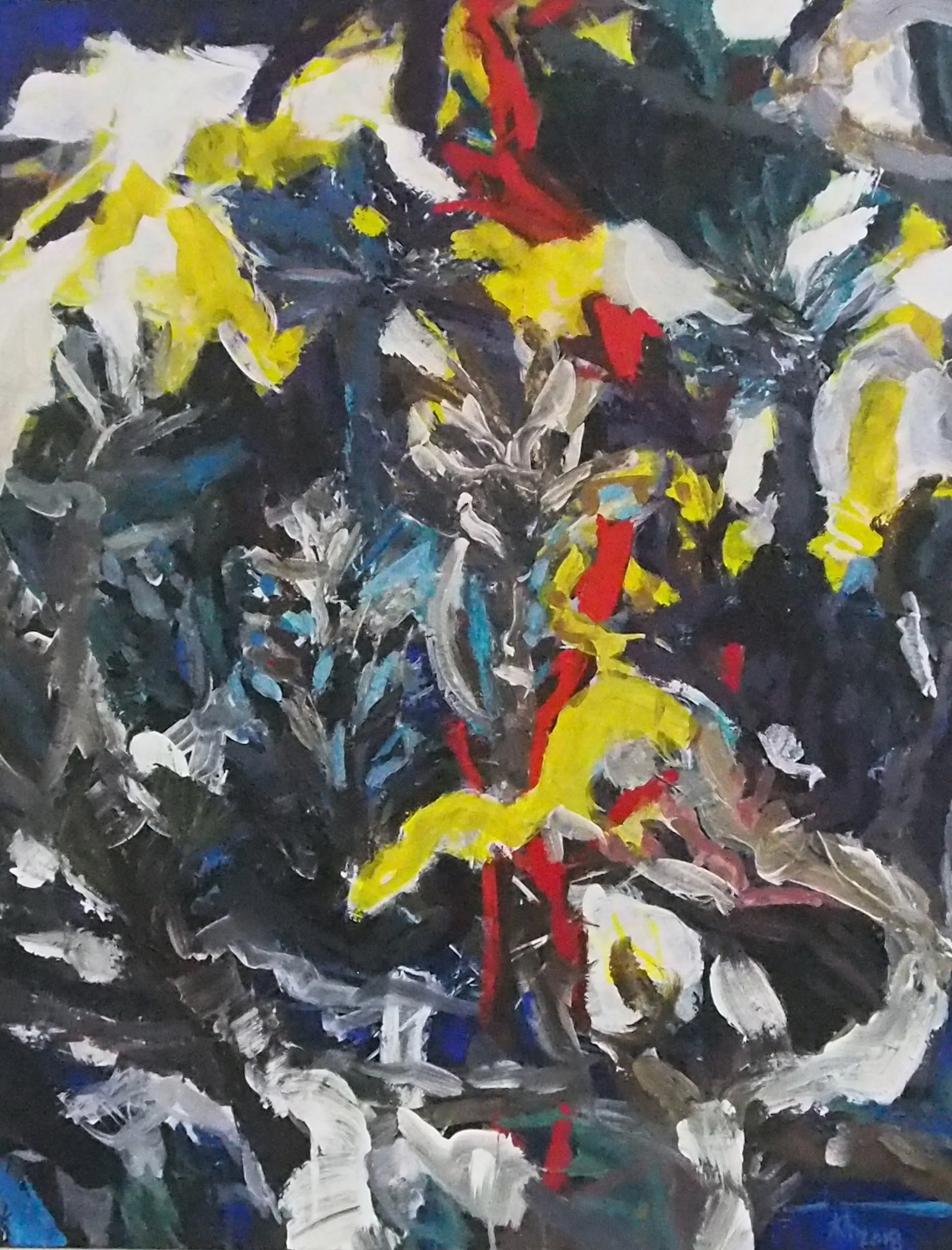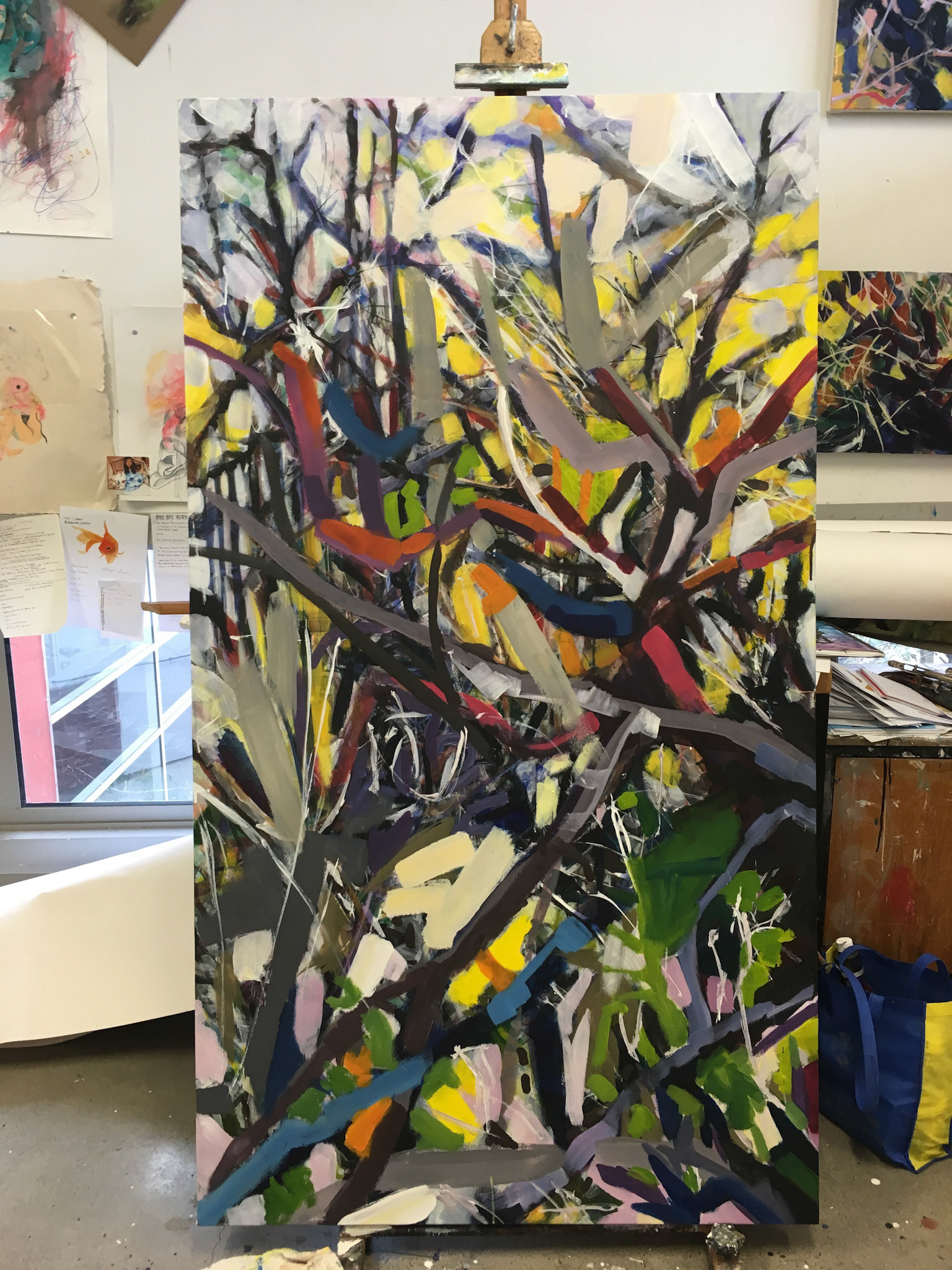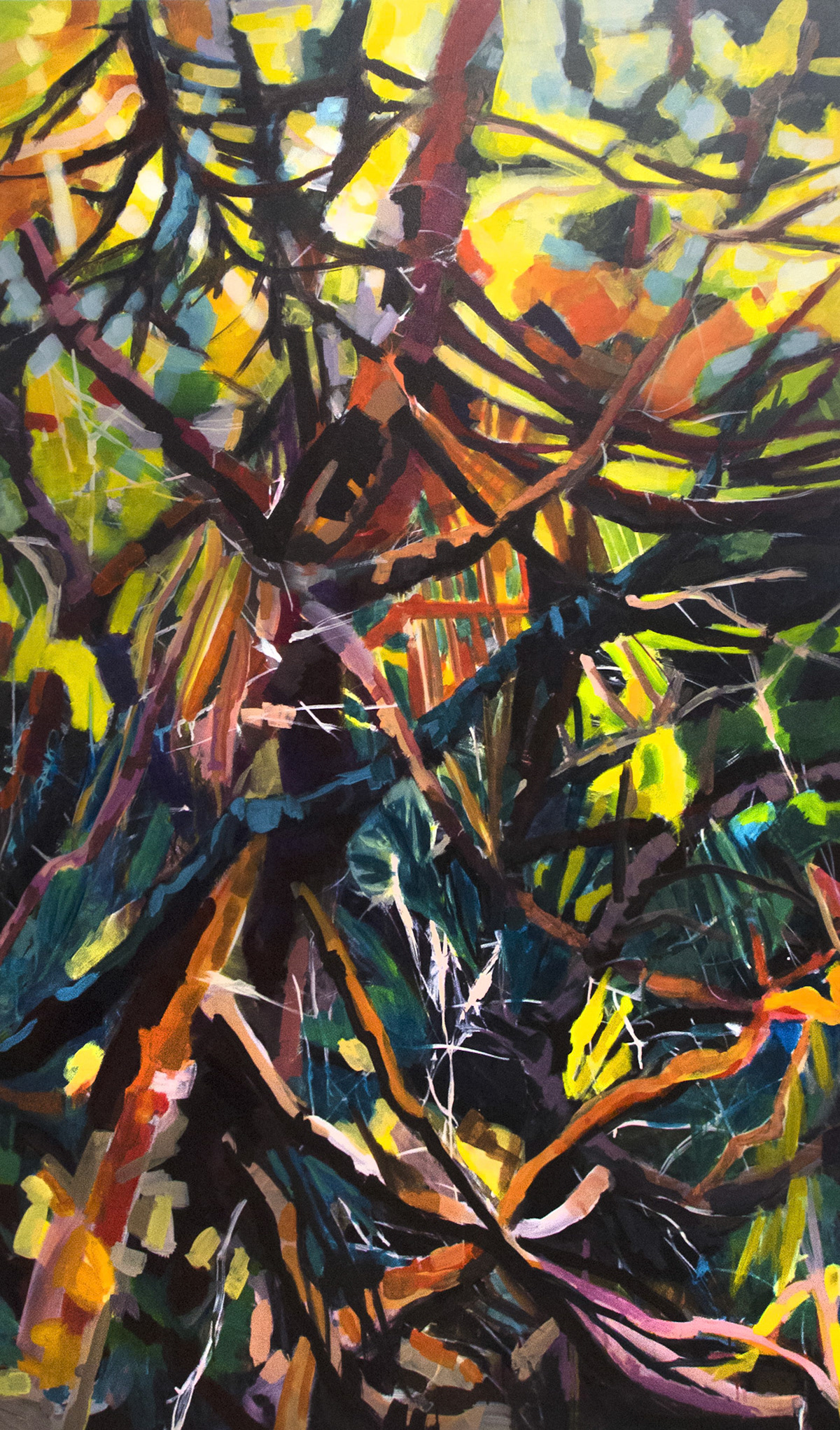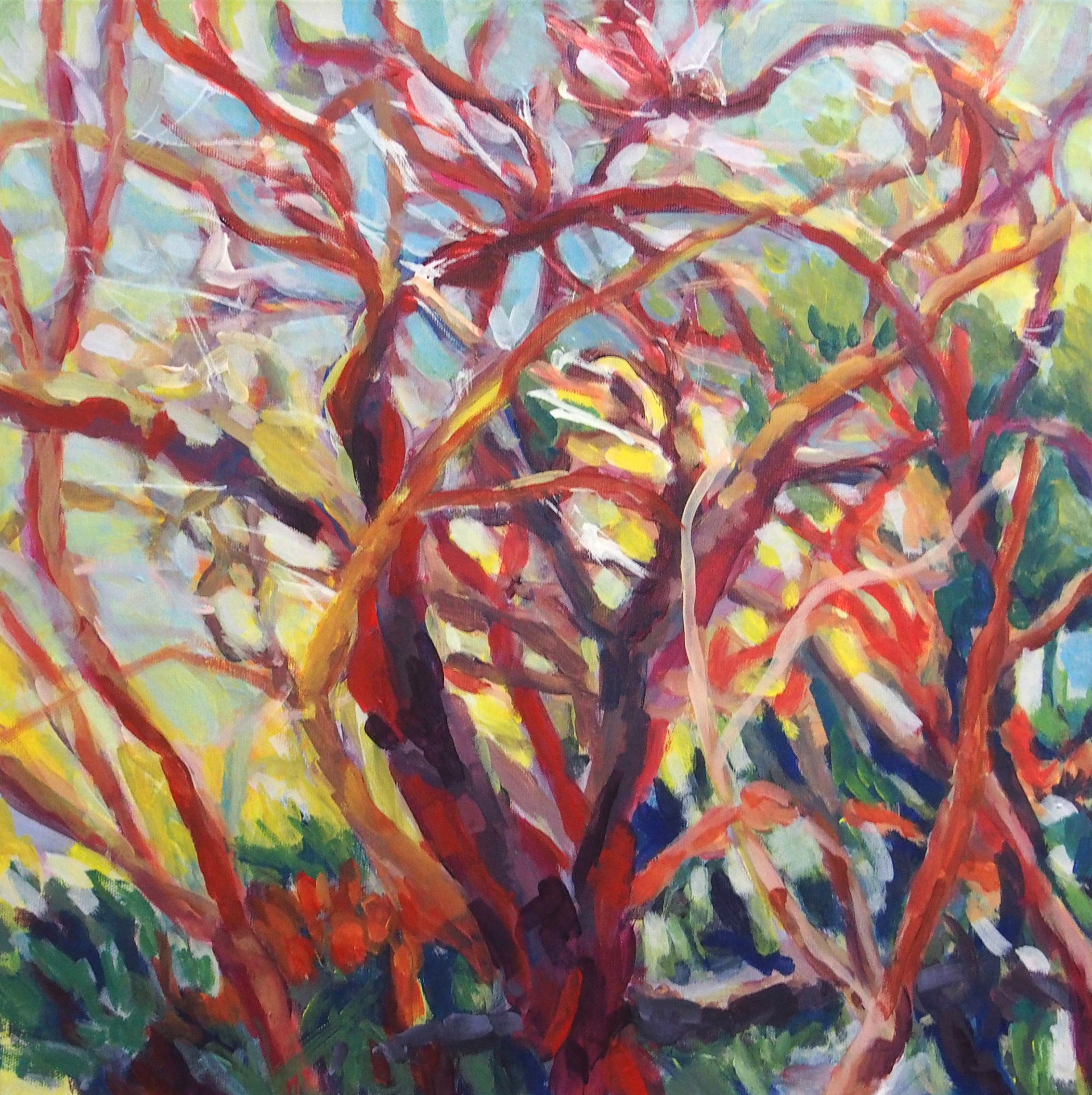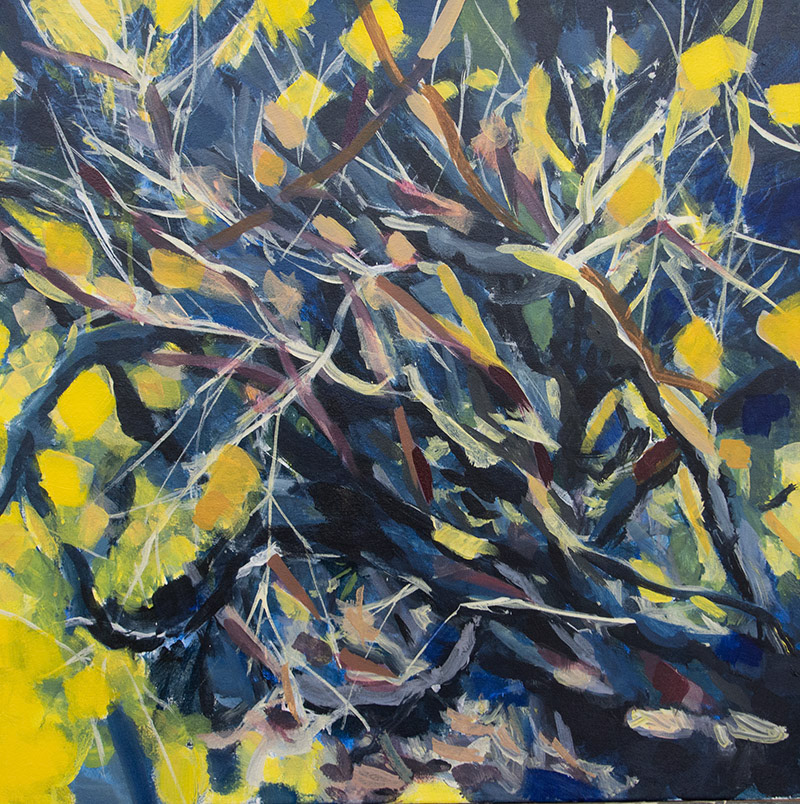
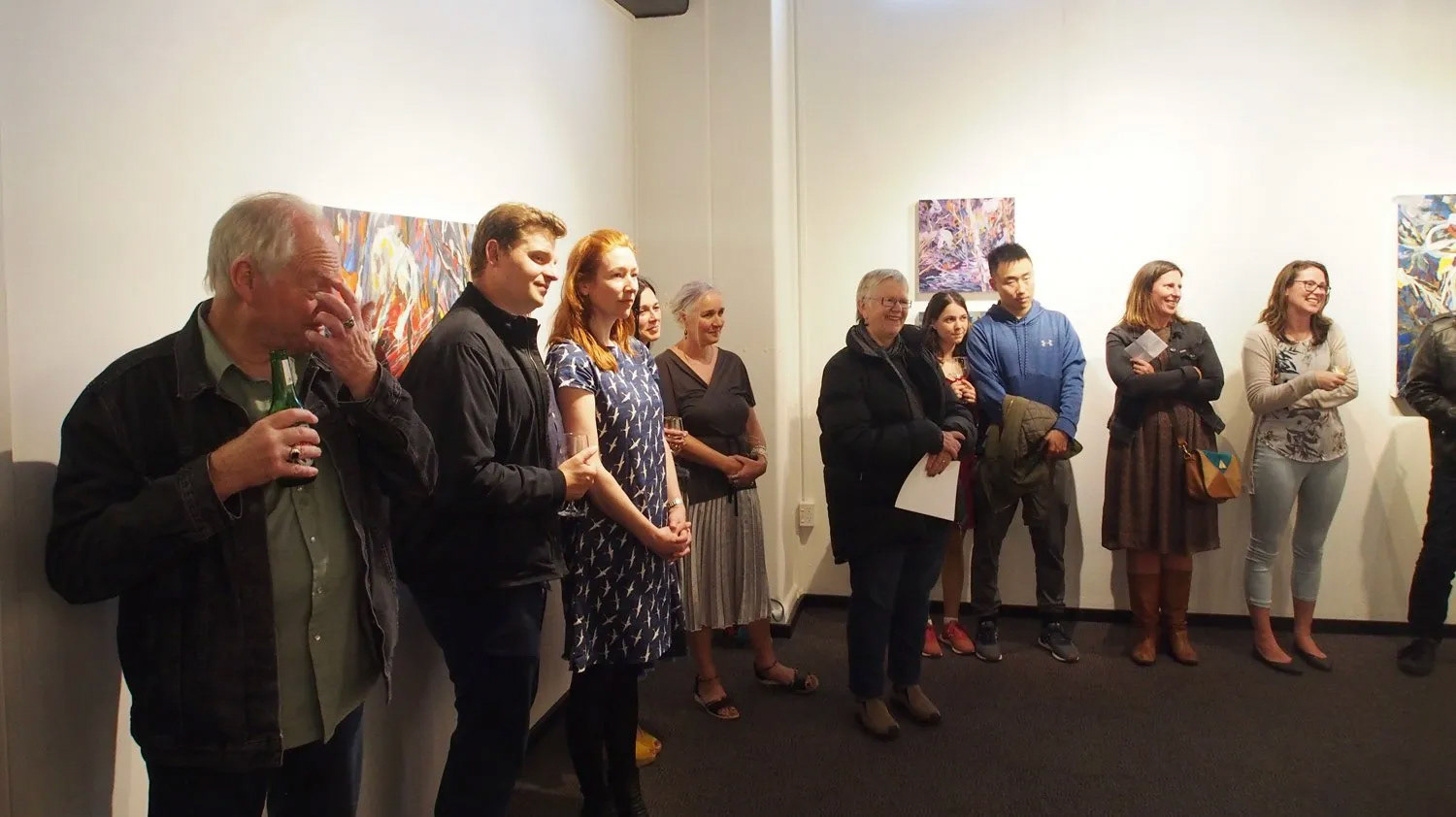
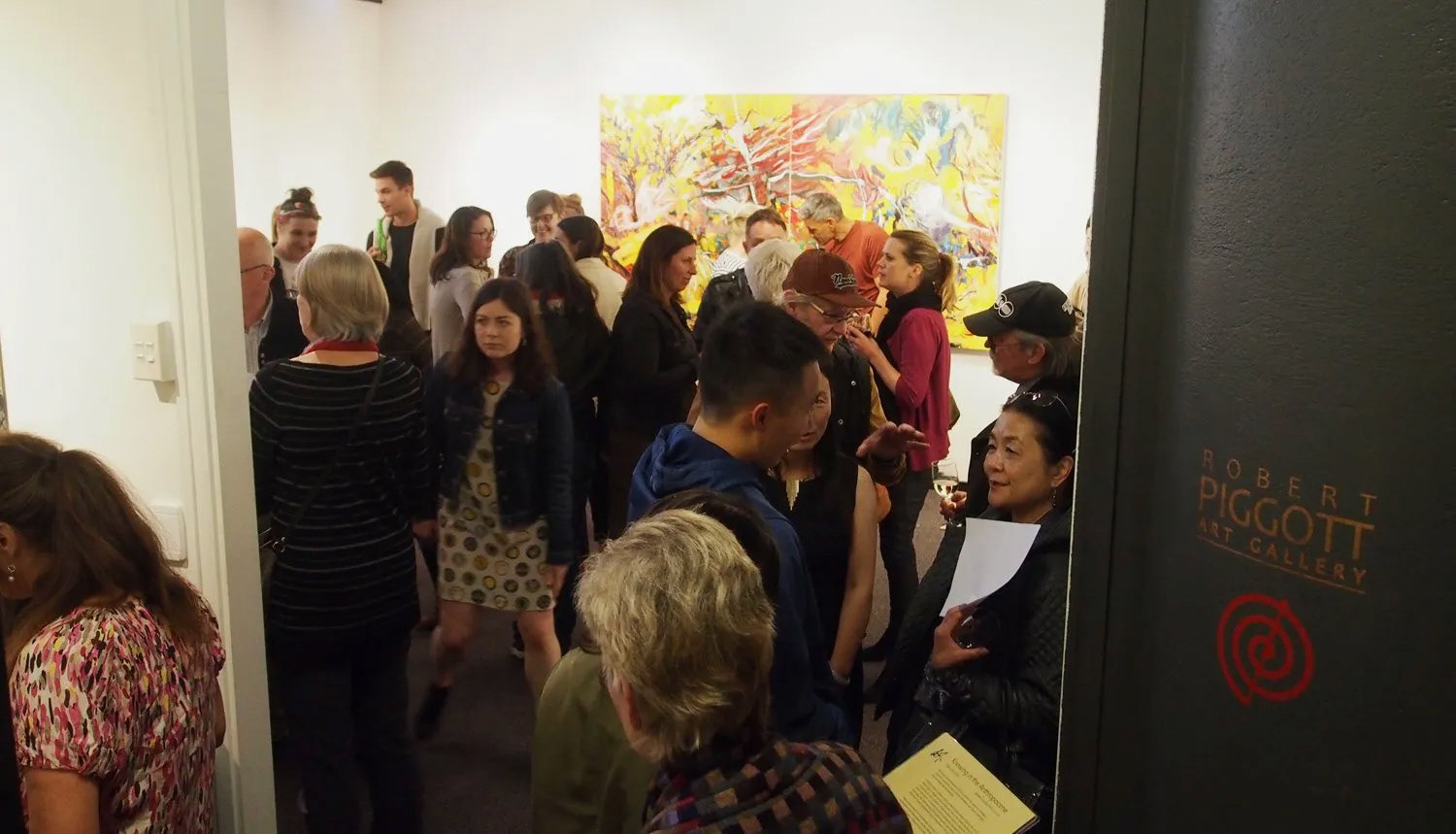
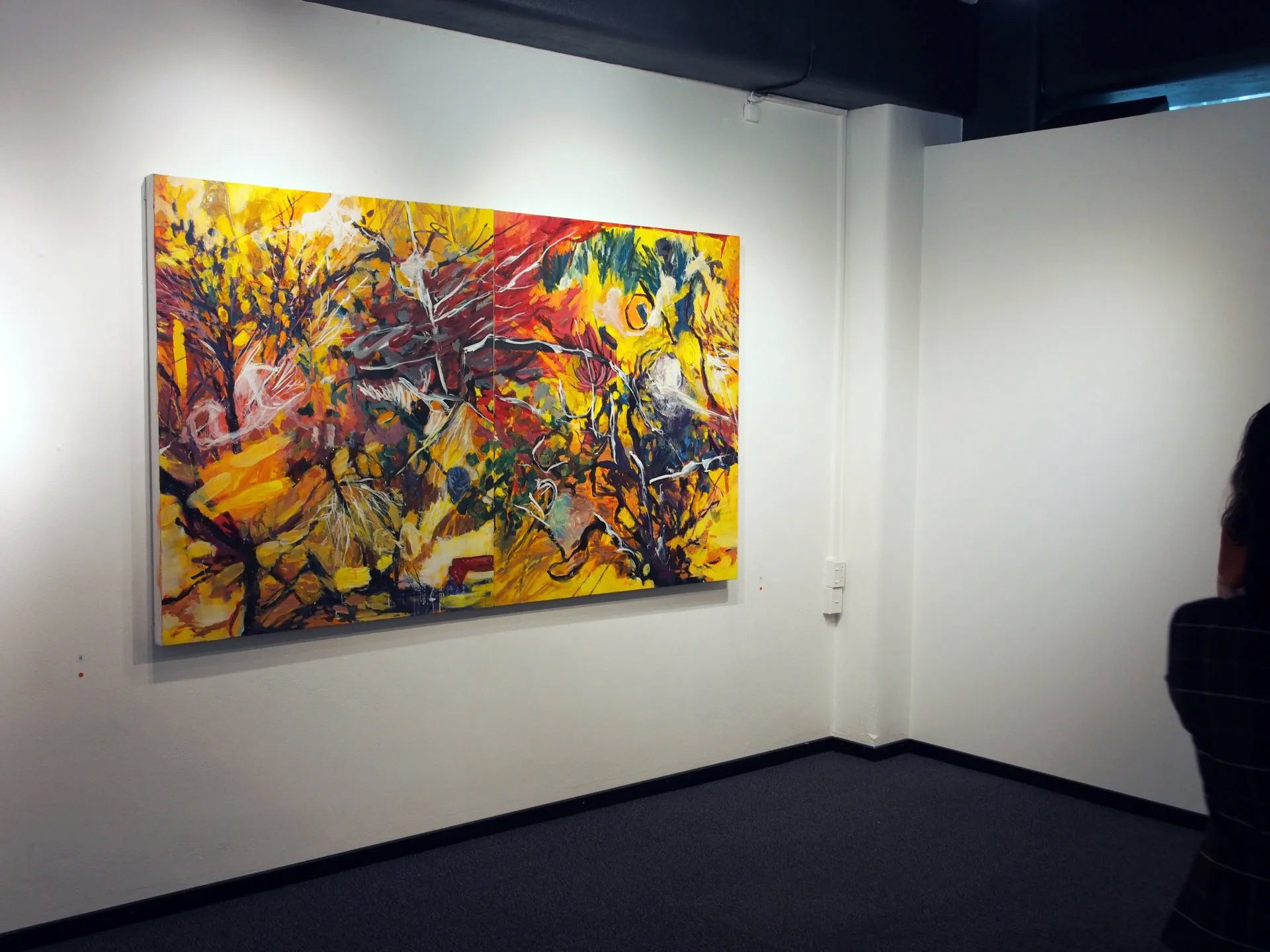
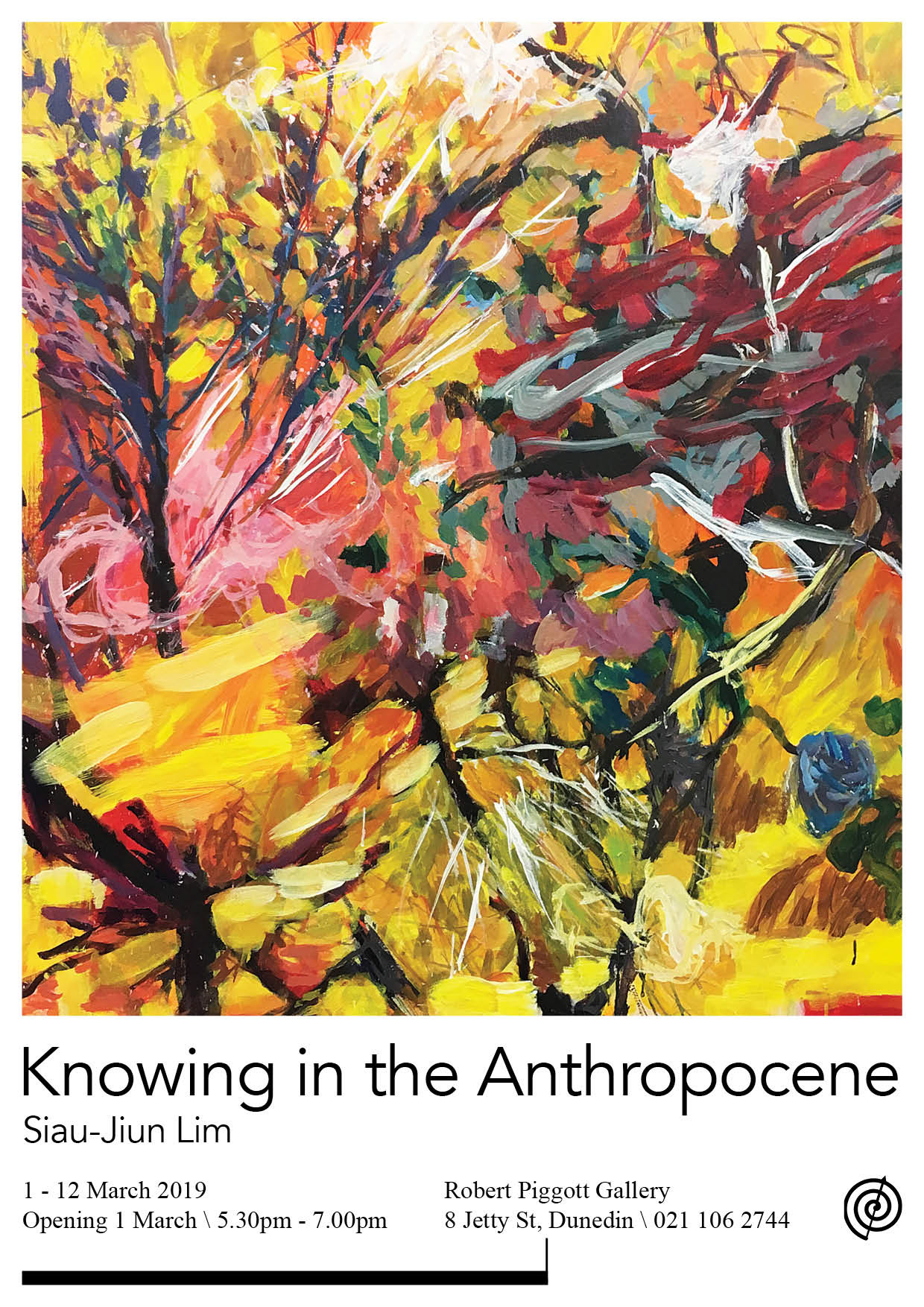
Knowing in the Anthropocene (2018) expresses the suspicion, weirdness, illogicality, uncertainty, anger, anxiety, randomness and chaos in the space between humans and the landscape.
Calling for better government policy around climate change; reducing the use of plastics bags; a stranger giving a judgmental look at your plastic shopping bag; or analysing recycling solutions: all these might be implied in the works, but these conversations or solutions are not the fundamental messages in the results. Knowing in the Anthropocene (2018) makes inquiries into human responses, which have formed a fragmented social awkwardness in the Anthropocene.
These works examine how environmental issues have repositioned our thoughts and reactions in the Anthropocene, how the fomentation of ecological problems and solutions is reflected in social behaviour, and are stirring up our position in sustainable practices.
The greatest achievement of human civilisation is our ability to adapt
our surroundings to us. It is also our greatest curse. By altering our
personal environment, we have stepped away from being at the mercy of
nature, and in doing so we have stopped caring for it. Yet we still
require the natural world, and we ignore its ills at our peril.
Malaysian-born Siau-Jiun Lim's art explores this dilemma, and the
intersection between the natural and human world. Her large-scale forest
images attempt to examine these themes in an objective way without
condemning, but she also imbues her work with raw emotion. The artist is
intrigued by scientific studies which show that - while lacking nervous
systems - plants send out chemical signals as a form of communication.
Our human attempts to control the natural environment might thus also
have consequences in the response of plants to their surroundings and
ultimately to us. Lim sees the relationship between people and nature as
a karmic feedback process; by caring for the environment, we create a
healthier humanity.
We take our surroundings for granted, though it is clear that the
landscape — in particular the forest landscape — provokes intense
emotional responses. The forest is a complex structure created
ultimately from repetitive patterns of growth, decay, light, and shade,
and as an environment it can provoke feelings ranging from tranquillity
to unease. We feel a connection as all our senses become keenly aware of
our surroundings. There are specific interactions and symbioses between
different plants, and if we allow it, we too become part of this emotional
ecosystem.
Lim attempts with her art to produce emotional and sensory responses
which are akin to those gained while stepping into a forest. The
stimulation of mental processes when presented with art can produce
similar experiences to those gained when surrounded by nature,
especially with works such as large-scale expressionist paintings where
considerable interpretation is required and where the images dominate
the observer.
Lim's history may be a telling factor in her desire to use her art to
promote environmentalism. Growing up in an isolated community deep
within the forest, she watched as trees were gradually replaced by the
encroachment of cities. Coming to New Zealand, she found a country which
prides itself on its natural wonders, but where the litter and waste
which New Zealanders leave without thought detracts from the environment
Lim has been making art from a very young age, but has only studied
formally since the mid-2010s. Her initial studies were as a web and
graphic designer, but she has since ventured into media which she feels
can make more direct emotional contact with the public. These include an
online "click & pick" challenge, in which the public was encouraged to
photograph and pick up rubbish around Dunedin. While simply picking up
the rubbish was a useful act; photographing of the trash made the
presence of environmental pollution more salient to those taking part.
Lim has since moved to the production of large-scale paintings, which
have provided her with the opportunity to produce images with heightened
emotional impact for public display. In her exhibition "Knowing in the
anthropocene", she has created strong, vibrant works on a large enough
scale that viewers feel themselves immersed within the art. In invoking
the term anthropocene, Lim specifically draws attention to humanity's
overreach of nature, and the irrevocable effects that we have had on our
surroundings. The works look at our behavioural responses to the
environmental changes which we have caused.
Lim's works are created from memory of real scenes, shetches in the bush
creating the blueprints for the final images. The paintings are largely
intuitive — there is little in the way of pre-planning of the finished
image, with the artist using a dynamic approach to create organic lines
and textures. Working from sketches, she make use of natural objects as
tools. Brushes, for instance, have been created using found feathers,
leaves and branches. In working in this way, the artist forges a strong
connection between the works and the natural world. These rough brushes
are also harder to control, allowing an aleatory element to enter the
works.
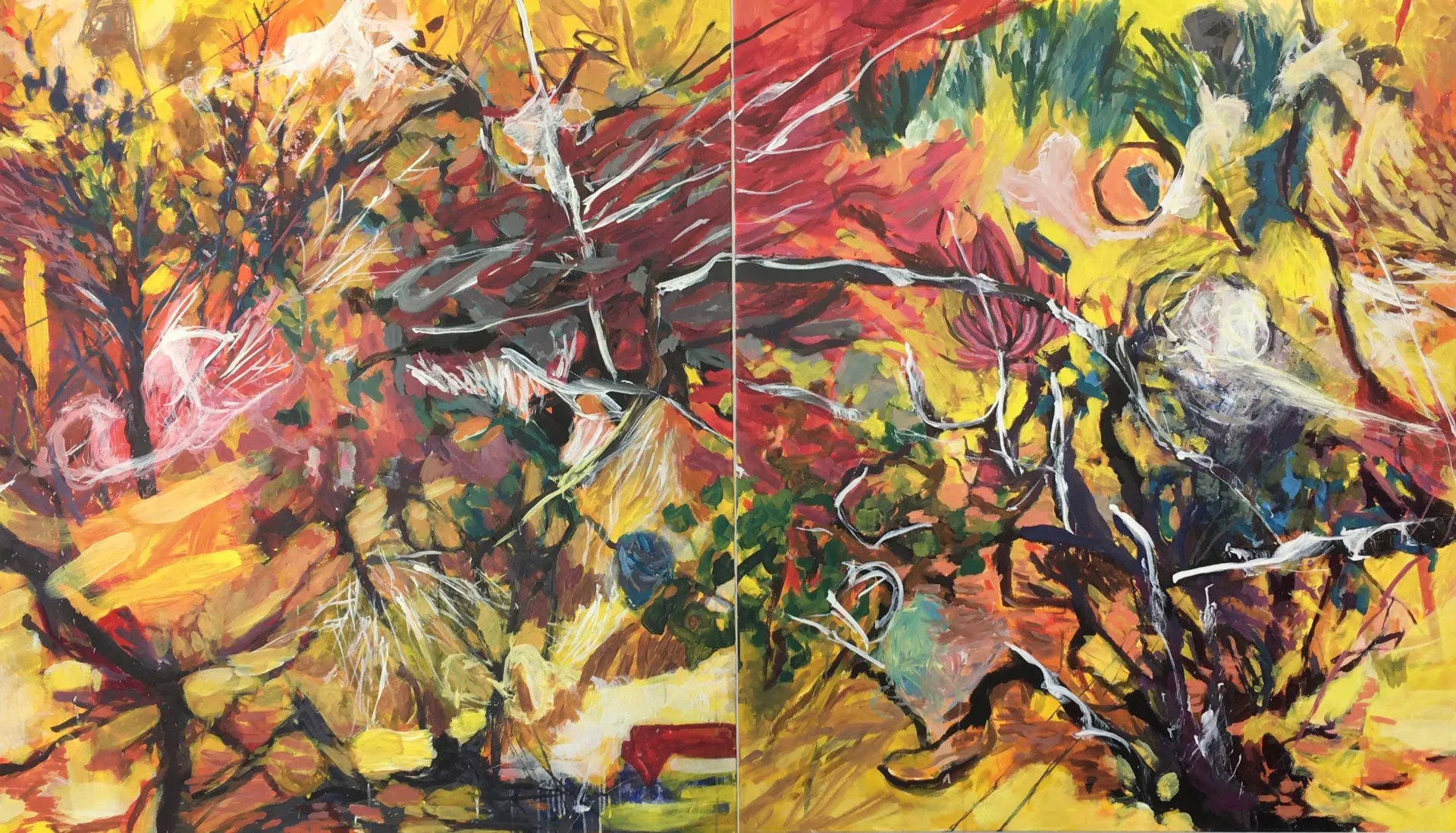
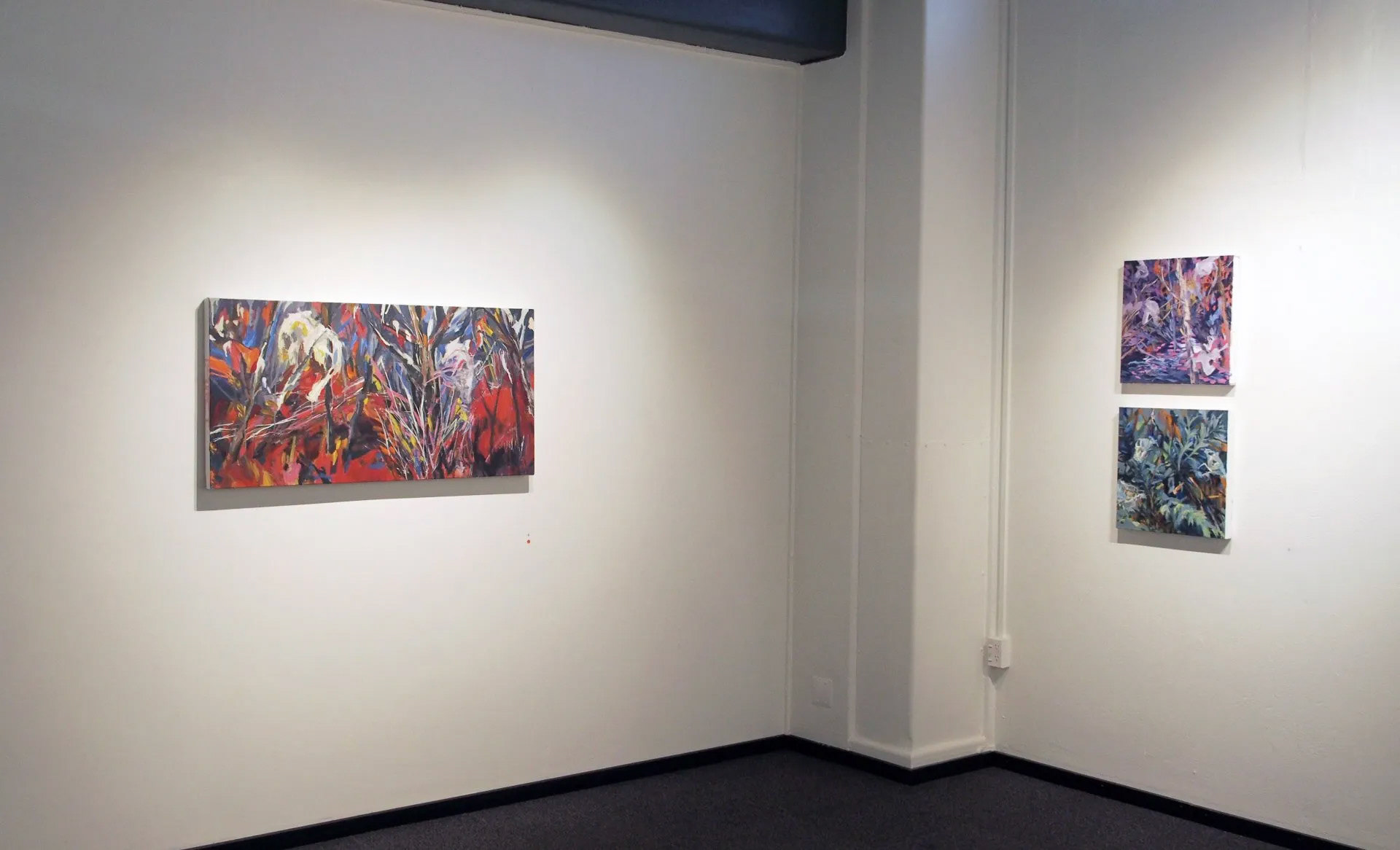
The resulting images tread the border between the realism of works such
as her 2016 painting "Relationship", with its crossing branches
stretching out into a grey sky, and the strong expressionist
abstractions of paintings like 2018's "Voltage" and "Something Missing
in the Red". Lim admits that several of her main influences are abstract
expressionist artists, notably mid-20th century American painter Joan
Mitchell. While these works move towards abstraction, the essence of the
natural scene is present. The gestural nature of the art reduces the
viewer's concentration on the scene's details, instead allowing emotion
to take over. Lim has stated that her aim is to influence the way we
look at nature by evoking strong responses in the viewer, and this her
art succeeds in doing.
Apr 2, 2019
James Dignan Reviews
our surroundings to us. It is also our greatest curse. By altering our
personal environment, we have stepped away from being at the mercy of
nature, and in doing so we have stopped caring for it. Yet we still
require the natural world, and we ignore its ills at our peril.
Malaysian-born Siau-Jiun Lim's art explores this dilemma, and the
intersection between the natural and human world. Her large-scale forest
images attempt to examine these themes in an objective way without
condemning, but she also imbues her work with raw emotion. The artist is
intrigued by scientific studies which show that - while lacking nervous
systems - plants send out chemical signals as a form of communication.
Our human attempts to control the natural environment might thus also
have consequences in the response of plants to their surroundings and
ultimately to us. Lim sees the relationship between people and nature as
a karmic feedback process; by caring for the environment, we create a
healthier humanity.
We take our surroundings for granted, though it is clear that the
landscape — in particular the forest landscape — provokes intense
emotional responses. The forest is a complex structure created
ultimately from repetitive patterns of growth, decay, light, and shade,
and as an environment it can provoke feelings ranging from tranquillity
to unease. We feel a connection as all our senses become keenly aware of
our surroundings. There are specific interactions and symbioses between
different plants, and if we allow it, we too become part of this emotional
ecosystem.
Lim attempts with her art to produce emotional and sensory responses
which are akin to those gained while stepping into a forest. The
stimulation of mental processes when presented with art can produce
similar experiences to those gained when surrounded by nature,
especially with works such as large-scale expressionist paintings where
considerable interpretation is required and where the images dominate
the observer.
Lim's history may be a telling factor in her desire to use her art to
promote environmentalism. Growing up in an isolated community deep
within the forest, she watched as trees were gradually replaced by the
encroachment of cities. Coming to New Zealand, she found a country which
prides itself on its natural wonders, but where the litter and waste
which New Zealanders leave without thought detracts from the environment
Lim has been making art from a very young age, but has only studied
formally since the mid-2010s. Her initial studies were as a web and
graphic designer, but she has since ventured into media which she feels
can make more direct emotional contact with the public. These include an
online "click & pick" challenge, in which the public was encouraged to
photograph and pick up rubbish around Dunedin. While simply picking up
the rubbish was a useful act; photographing of the trash made the
presence of environmental pollution more salient to those taking part.
Lim has since moved to the production of large-scale paintings, which
have provided her with the opportunity to produce images with heightened
emotional impact for public display. In her exhibition "Knowing in the
anthropocene", she has created strong, vibrant works on a large enough
scale that viewers feel themselves immersed within the art. In invoking
the term anthropocene, Lim specifically draws attention to humanity's
overreach of nature, and the irrevocable effects that we have had on our
surroundings. The works look at our behavioural responses to the
environmental changes which we have caused.
Lim's works are created from memory of real scenes, shetches in the bush
creating the blueprints for the final images. The paintings are largely
intuitive — there is little in the way of pre-planning of the finished
image, with the artist using a dynamic approach to create organic lines
and textures. Working from sketches, she make use of natural objects as
tools. Brushes, for instance, have been created using found feathers,
leaves and branches. In working in this way, the artist forges a strong
connection between the works and the natural world. These rough brushes
are also harder to control, allowing an aleatory element to enter the
works.
The resulting images tread the border between the realism of works such
as her 2016 painting "Relationship", with its crossing branches
stretching out into a grey sky, and the strong expressionist
abstractions of paintings like 2018's "Voltage" and "Something Missing
in the Red". Lim admits that several of her main influences are abstract
expressionist artists, notably mid-20th century American painter Joan
Mitchell. While these works move towards abstraction, the essence of the
natural scene is present. The gestural nature of the art reduces the
viewer's concentration on the scene's details, instead allowing emotion
to take over. Lim has stated that her aim is to influence the way we
look at nature by evoking strong responses in the viewer, and this her
art succeeds in doing.
Apr 2, 2019
James Dignan Reviews
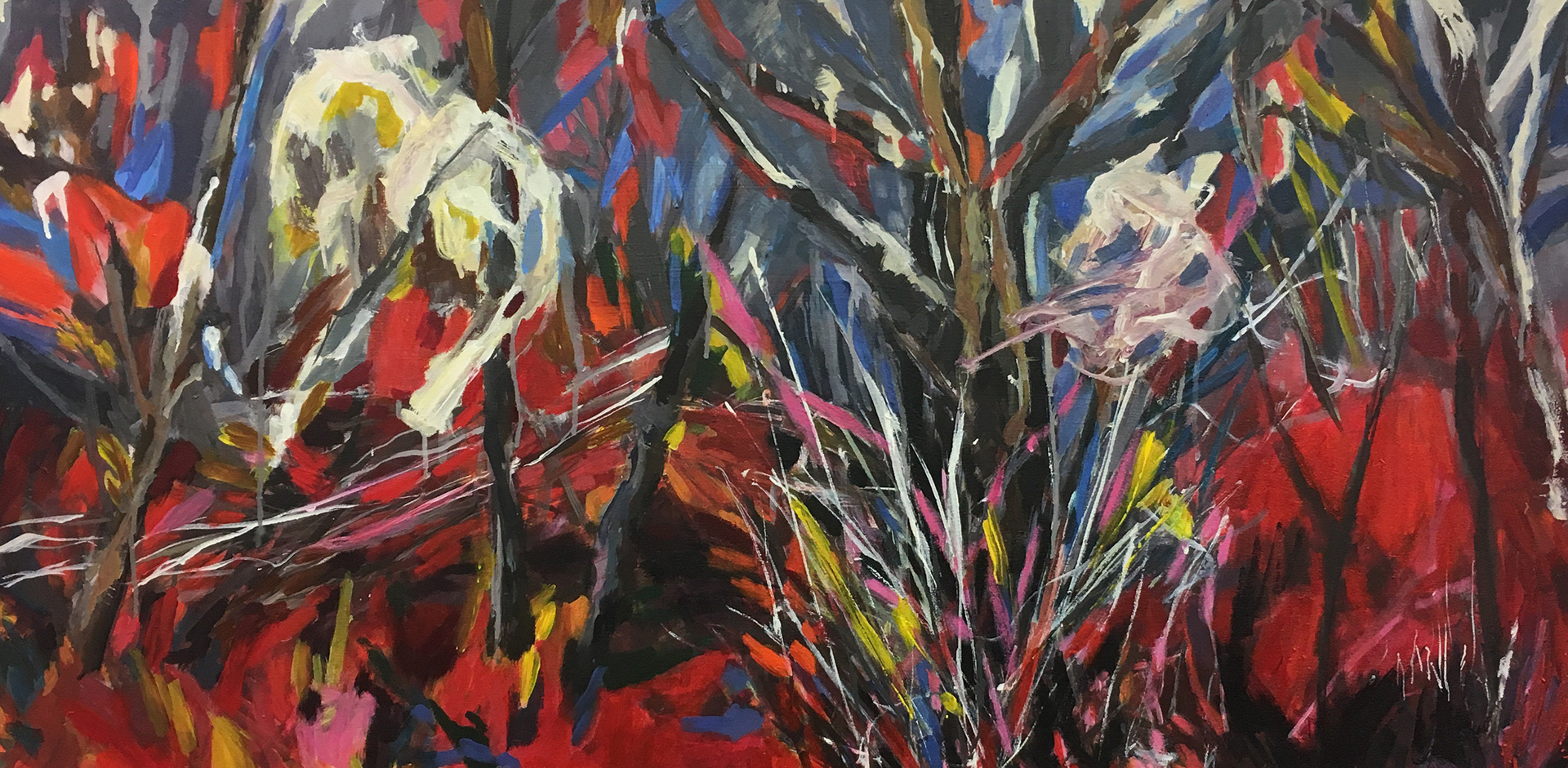
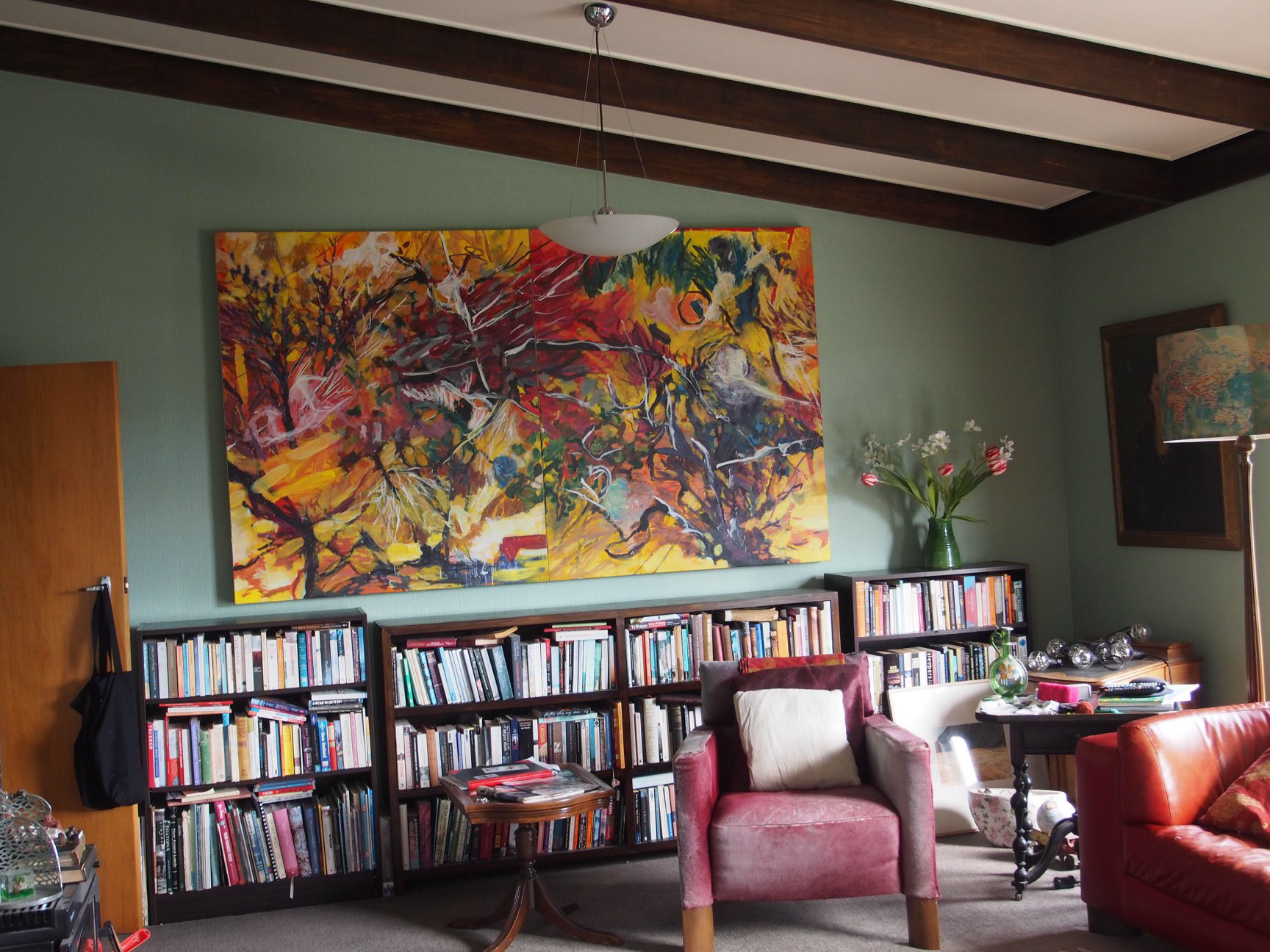
Something is missing in the red 2018